Jinan Photolithography Intelligence Technology Co., LTD
Photolithography CNC Laser Machine
Intelligence Shapes the Future

Dual Spot Laser Cutting Machine: Working Principle, Advantages & Application for High Power Fiber Laser Machine
H1: Dual-Spot Laser Cutting Head: Why 12kW Machines Reach 20kW Cutting Speed
Introduction
The metal fabrication industry faces brutal profit compression amid fierce market competition. Sheet metal shop owners constantly struggle with two core pain points:
1.High-power 20kW+ laser equipment carries huge depreciation costs and slow ROI;
2.Single-spot laser heads cannot balance thin plate speed and thick plate cutting quality
Dual-spot laser cutting heads (widely known as Black King Kong dual-spot cutting heads) emerged as a game-changing optical solution to solve this dilemma. Many fabricators report that 12kW lasers equipped with dual-spot cutting heads deliver equivalent thin-plate cutting efficiency as 20kW single-spot machines, while cutting equipment depreciation loss is halved.
This guide fully breaks down dual-spot optical structure, switching logic, core cutting advantages, comparison with traditional zoom adjustable beam heads, applicable power ranges, and future multi-spot laser development trends, based on industry patent data and real workshop test results.
H2: What Exactly Is a Dual-Spot Laser Cutting Machine?
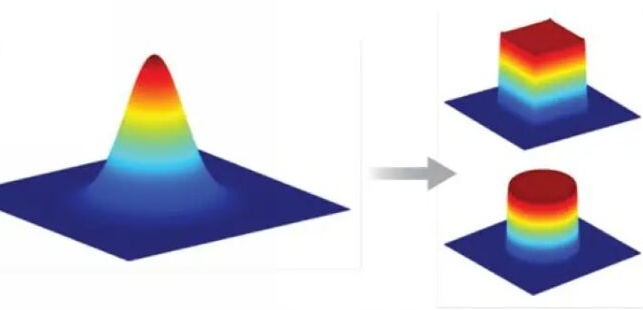
Dual-spot does not mean two separate laser beams; it refers to one laser source switching between two distinct focused spot sizes: tiny Gaussian small spot and wide flat-top large spot, via a built-in rotating optical lens module.
Small Gaussian spot: Concentrated energy density for ultra-fast thin plate melting & vaporization cutting;
Large flat-top spot: Wider energy coverage to boost oxidation combustion reaction for clean thick plate cutting without dross.
H3: How Dual-Spot Lens Switching Mechanism Works
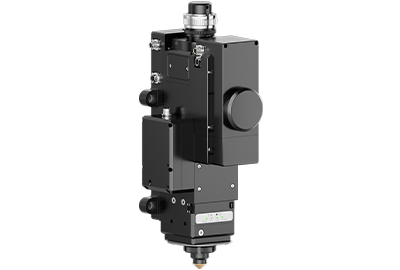
All mainstream dual-spot cutting heads adopt a 90° rotating lens switching unit on the cutting head exterior
Core optical components: Collimating lens, focusing lens, dual-spot switching lens assembly;
Control logic: CNC system sends simple IO signal to rotate the dual-spot lens block by 90°, instantly swapping beam focusing parameters, no extra motion axes or expensive control boards required.
H4: Dual-Spot vs Zoom Adjustable Beam (Continuous Variable Spot) Laser Head
Many manufacturers once launched zoom (continuous variable spot) cutting heads, yet they failed to gain mainstream market traction, while dual-spot technology dominates high-power laser equipment. Below is a full comparison:
H5:Why Are Dual-Spot Laser Cutters Not Recommended for Low-Power Applications?
For low & medium power lasers (3kW–8kW), adjusting spot size barely improves cutting speed or surface quality, making complex zoom structures a waste of cost. Only 12kW+ high-power fiber lasers can fully unlock spot-variable optical advantages.
Dual-spot strikes a perfect balance: two spot modes cover all common sheet metal cutting scenarios, low production cost, easy CNC integration, and minimal operator learning cost—ideal for standard mass fabrication equipment.
H6: Key Advantages of the Dual-Spot Laser Cutting Head for Sheet Metal Factories
H6: 1. Lower Capital Investment, Equivalent High-Power Cutting Output
A 12kW laser with dual-spot head achieves thin-plate cutting speed matching a 20kW single-spot machine. Equipment depreciation gap is massive:
20kW laser annual depreciation loss: ~$2,800
12kW dual-spot laser annual depreciation loss: ~$1,400
Fabricators save tens of thousands of dollars in equipment investment while retaining full thin-plate processing capacity, shortening equipment payback period significantly.
H6:2. Optimized Cutting Performance for All Plate Thicknesses
Thin plates (0.5–3mm stainless steel/carbon steel): Switch to small Gaussian spot. Ultra-high energy density accelerates vaporization cutting, 30%–50% faster cutting speed, minimal heat-affected zone, burr-free edges.
Medium & thick plates (4–25mm carbon steel): Switch to large flat-top spot. Wider laser energy coverage activates sufficient oxygen combustion reaction, auxiliary melting removal, clean bright cutting surface without slag buildup.
H6: 3. Low Maintenance & High Machine Stability
Rotary cylinder drive structure has fewer moving components than zoom heads, reducing optical misalignment failures;
Dual-spot optical lenses undergo massive simulation and cutting test optimization, stable long-term beam quality without frequent calibration.
H7: Frequently Asked Questions About Dual-Spot Laser Cutting Heads
Q1: Can dual-spot improve cutting performance on low-power lasers (3kW–8kW)?
A: No. Spot size adjustment barely changes cutting speed or edge quality for lasers below 8kW. The added optical structure increases costs without tangible production gains, so dual-spot is only recommended for 10kW+ high-power equipment.
Q2: Do I need to replace my CNC system to install a dual-spot cutting head?
A: No. All mainstream laser CNC controllers pre-reserve IO signal interfaces for lens rotation switching. No extra control board or software modification is required, plug-and-play compatible with existing machines.
Q3: Is dual-spot cutting head worth upgrading for existing laser machines?
A: Upgrade is recommended if your workshop primarily processes thin plates (0.5–3mm) and you plan to avoid purchasing expensive 20kW+ high-power lasers. For factories focusing solely on thick plate processing, the efficiency improvement will be limited.